

a round-up for the weekend
A few good things to share....

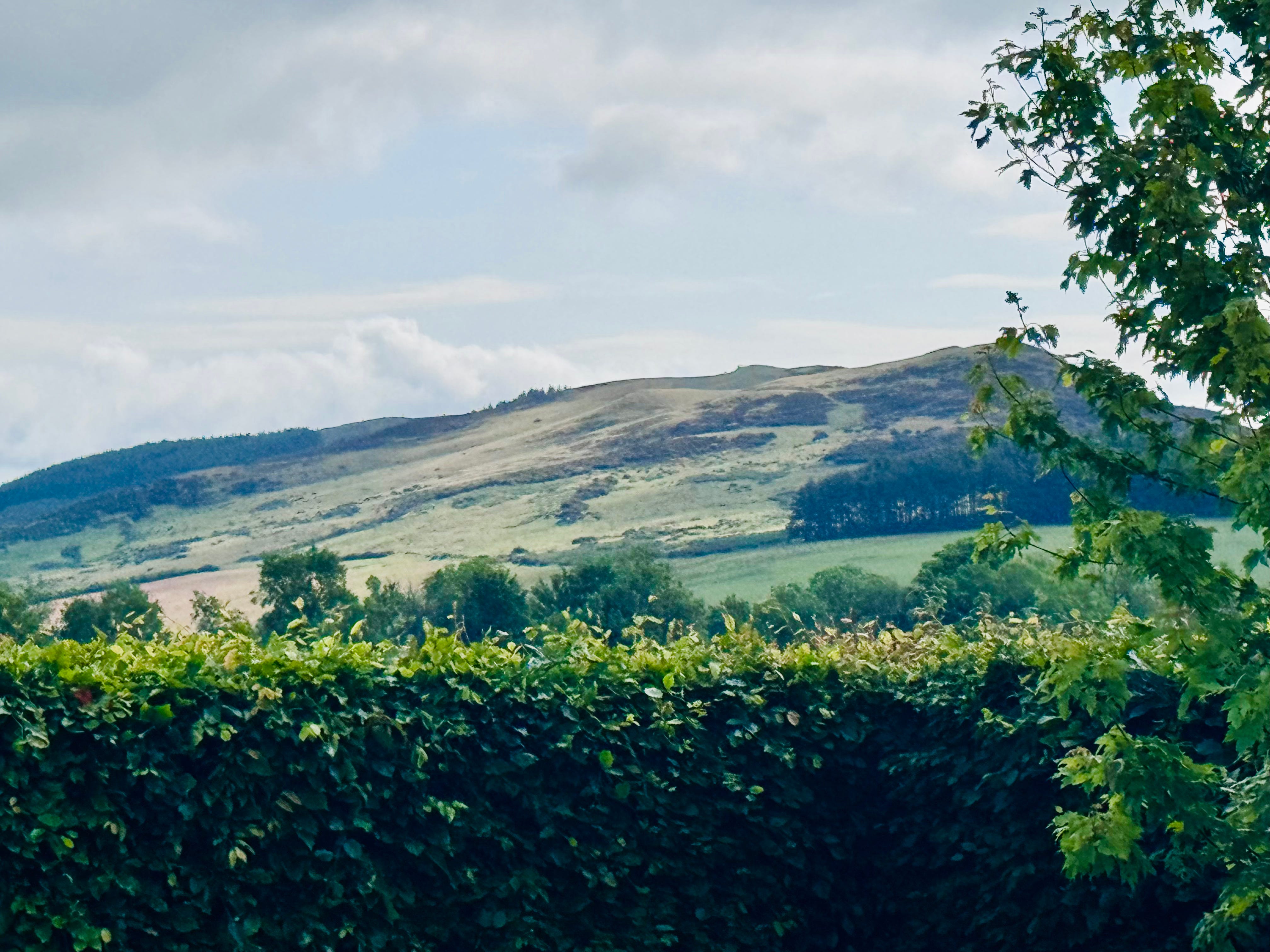
But first, can I just say: THE KNICKS! And SCOTLAND!
The last time The Knicks won the championship, I was ten years old and in love with my guitar, David Cassidy, and Olivia Newton-John, in equal measure. Maybe more than equal.
Nixon was President. My dog was Chips, an Airedale with a crazy sense of humor. My grandmother, who I loved more than anyone else in the world, lived across the street and was in our apartment every day. My parents were still together and reasonably happy, although my mother had just begun, at thirty-eight, to show signs of what I now know was bipolar disorder, when her moods changed and cycled in days and hours, rather than months.
My father was glued to the television; he loved The Knicks and The Giants. but not The Mets or The Yankees, because he hated baseball. I loved seeing him turn into a bona fide guy like my friends’ fathers: sportsfans who every once in a while cracked a Pabst Blue Ribbon while screaming at the television. We were not beer drinkers in my home except for seven years earlier, when, at three years old, I begged him to stop the car for a can of Schlitz while we were driving home from visiting family in New Jersey and he did, and somehow popped it open with his pocket knife, reached over his headrest to where I was whimpering in the back of our Barracuda, and handed it to me. (This is a story for another time.) But he was not a beer drinker — he could tell you the provenance of a good Burgundy with his eyes closed — until The Knicks won in 1973.
As for Scotland? I have had a love affair with that country for most of my life, with no clue as to why. Its music, art, fashion, history, literature, and hills have captivated me for years. So imagine my surprise when we learned that Susan, who was adopted, is of Scots lineage with a clan name as old as time itself, and she was just granted citizenship last week. And then Scotland won. And then the Tartan Army took over Boston, where I went to school.
I’m almost embarrassed to say how happy I was.
Through all of this, we are continuing to clean out my mother’s Manhattan apartment: Housing Works came on Monday and took most of her furniture, and her building guys are helping remove some of what’s left over (gigantic mirrored wall units from the 1980s) while I’m not there because it’s just too hard. When movers come in to remove stuff, I’m good for about eight seconds and then I have to turn my back.
Apologies, then, for not getting my roundup to you last week: the apartment-emptying job has been all-consuming.
I do want to share some things that I have fallen for over the last few weeks, and I hope that you, too, enjoy them as much as I have:
Listening and Watching
I have fallen hook, line, and sinker for Matt Gibberd’s podcast, Homing; I’ve written about it, and his company, Inigo, many times here. I’ve been trying to unpack where this recent unbridled interest in all-things design is suddenly coming from this late in life (I’ll be 63 next week), and then I realized that I seem to have inherited my father’s powerful lust for good design, be it textile, architecture, furniture, or clothing (which might be the only thing he shared with my mother). My father was a Manhattan advertising creative director in the Danish Modern 1960s and 70s, and I would often find him at home in the evenings, upholstering our dining room chairs, or sewing complicated window treatments with a borrowed sewing machine, or wax-casting heavy modernist silver jewelry on our dining room table for my mother. (Didn’t every father do this?) The result was the subconscious understanding that all good design — and the way we live with it — is profoundly connected.
I found Matt Gibberd’s Inigo before I discovered Homing, but when I did, it was via his conversation with Nigel Slater, that checks all my boxes: terraced Georgian house, interior/culinary/Margaret Howell-ish aesthetic, and a garden so gorgeously layered and textured that it seems unreal. Then I went down a Homing rabbit hole: there was Jeremy Lee, Meera Sodha, the late Skye Gyngell, and my dear friend Katherine May. And this week, I found myself listening on repeat to Gibberd’s conversation with designer and owner of Berdoulat, Patrick Williams, who talks movingly not only about his home and the house in France his late parents restored, but the things in those homes, that are reflections of place but also of the lives they lived. When the contents of my parents’ home was packed up, Williams says, it was no longer their home.
This is where I am now, with the pack-up of my mother’s apartment of almost fifty years, and I find myself thinking, always, how much of a person is comprised by the things that surround them?
Listen to this conversation with Patrick Williams; it will change the way you think about the things you live with.
Have a listen to the late Robert Thurman and Sharon Salzberg in a classic, sometimes hilarious, and brilliant conversation with The On Being Project ‘s Krista Tippett. Robert passed this week, and his loss is immeasurable.
Reading (and Journaling
)An admission: the word journaling leaves me cold. I’m not crazy about it as a verb or an announced act, because the former doesn’t really exist in our lexicon, and the latter reduces this venerated ancient practice to a trend. Did Samuel Pepys say to himself on a rainy Wednesday afternoon I feel like a little journaling - ? Did Virginia Woolf? Or Joan Didion? Or Anne Lister? I know - I’m probably sounding harsh. But the fact is that not only was keeping a journal always a deeply private undertaking — it wasn’t something that one necessarily announced as a therapeutic practice — it also wasn’t a saleable trend.
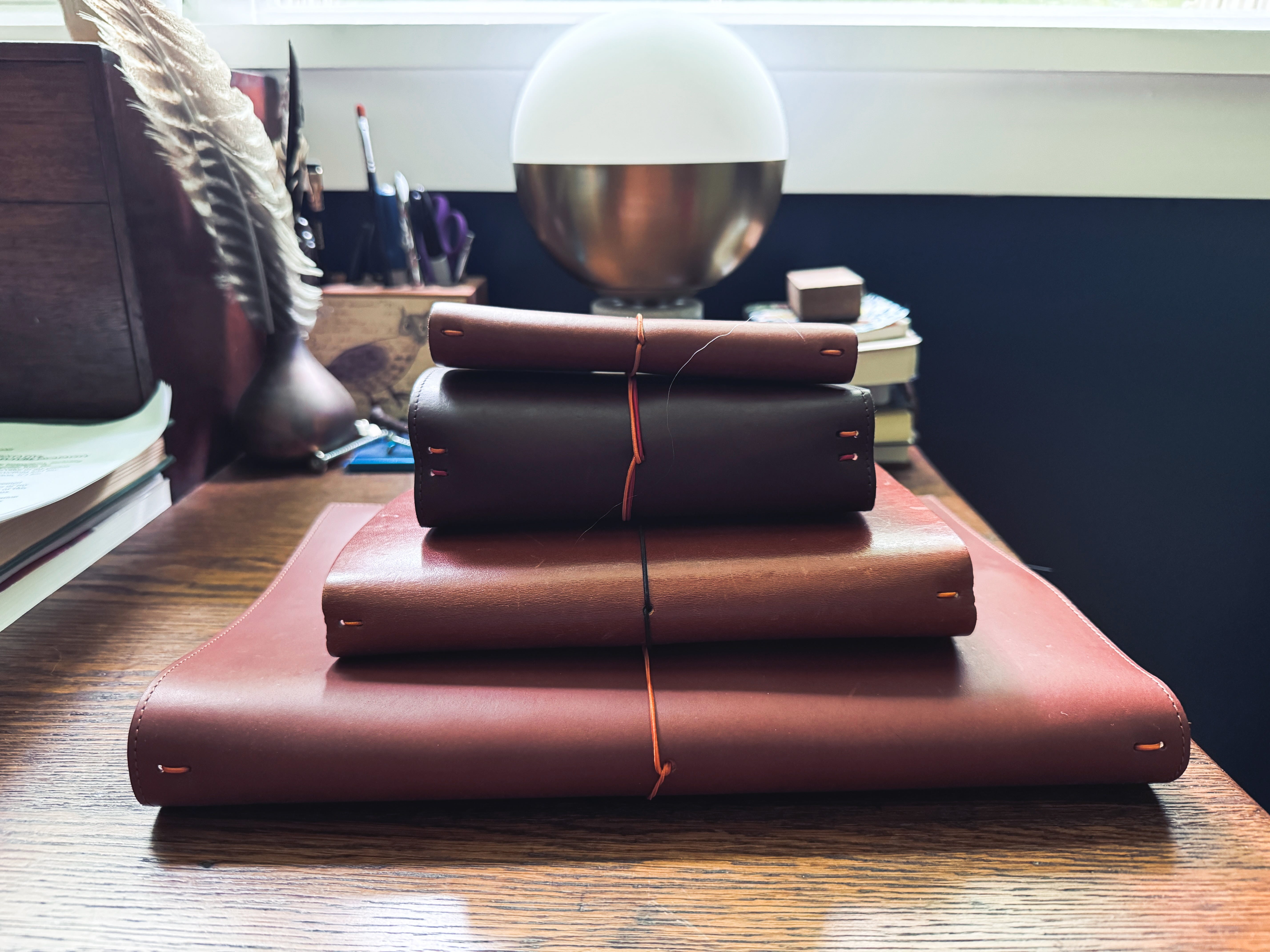
This said, I keep a journal (three of them, different sizes for different purposes, all Paper Republic, A6, A5, A4, the last of which is a process journal I’m using in the writing and research of my next book, Where You Used to Be) and have since I was thirteen. Keeping a journal has helped maintain my sanity, and has been revelatory in that during the most complicated times of my life, those pages have remained blank because sometimes, there are no words. And I am utterly compelled by artists and writers who keep journals that create visual narratives. This week, I found myself on the website of Lara Call Gastinger, a botanical artist based in Central Virginia, whose work is just magnificent. Gastinger has created a Perpetual Journal project, and describes it this way:
This is how a perpetual journal works. The pages are marked with the dates of the 52 weeks of the year (i.e... January 1-7, January 8-14...). The dating of these weeks (in the upper left corner) is not tied to a specific year. The artist uses the journal to record observations during a particular week of the year. This process continues and the artist can return to the same week in subsequent (perpetual) years. Eventually, a page is filled up with multilayered drawings of consecutive years on one page.
The beauty of this process is the repetitive return to each week and learning the changes in the seasons, the effects of climate change, and the development of artistic skills. This process also lowers the bar for perfection and makes the journal process and botanical art more accessible.
On June 27th, Gastinger will be launching her new book, A Perpetual Journal Practice at an event sponsored by The New Dominion Bookshop in Charlottesville, Virginia.
My Fellow Substackers
This was a week to get lost in some extraordinary writing on Substack, a platform I continue to mostly love (until I run into trolls, who are mostly bots, who I have no problem vaporizing on the spot).
