the midweek roundup
(Step into any garden, anywhere, and if it's your own, bring your mini-secateurs)

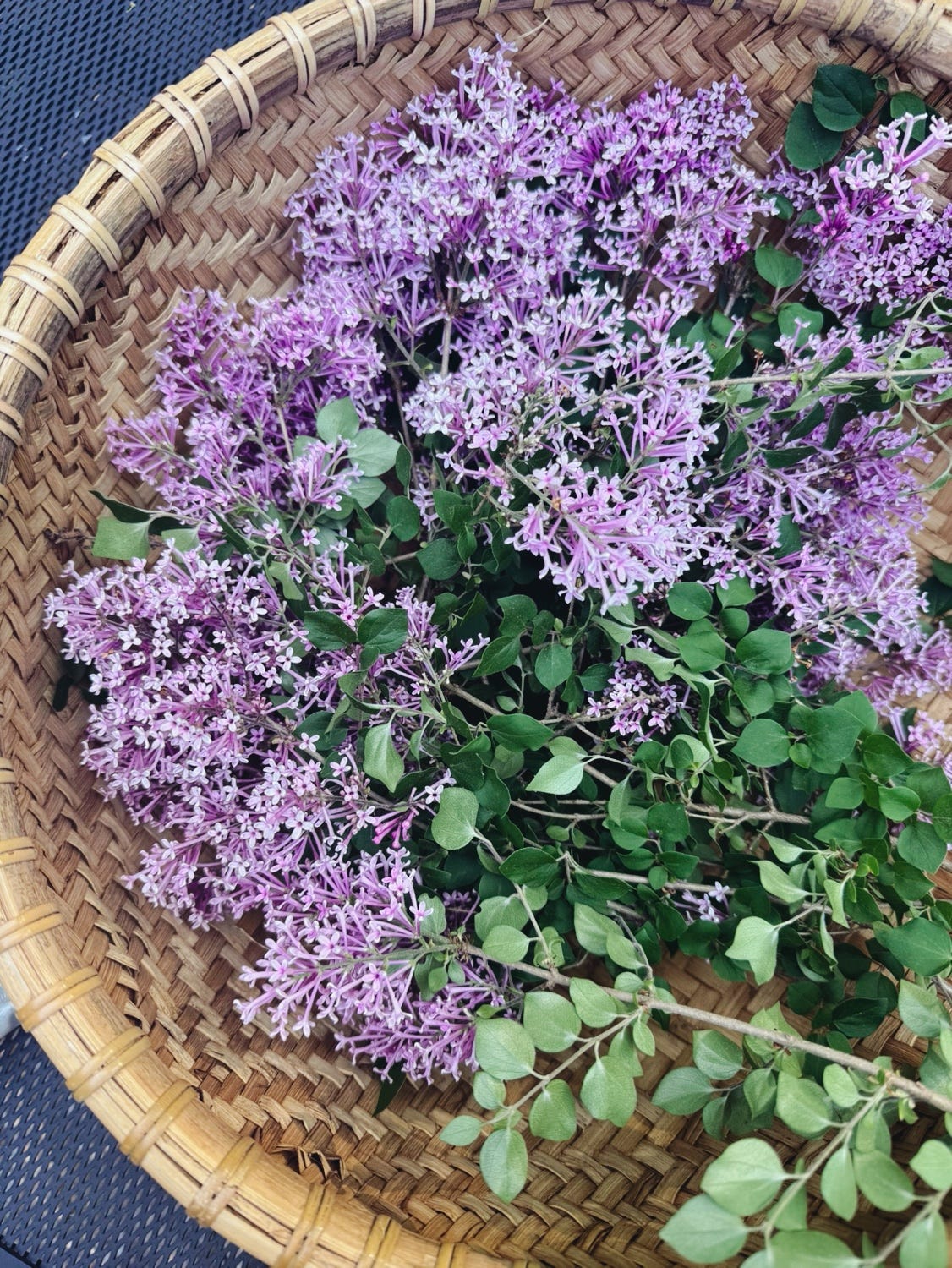
I’ve been waking very early every morning (early for me; I like sleep, probably too much), and today I went out into the backyard where we have an immense lilac in full bloom, bursting with flower and fragrance so strong that it comes in through the windows that face it at the back of the house. A few weeks ago, I bought a pair of tiny secateurs to put in my pocket when I go out into the yard, because at this time of year, there is always something in bloom: yellow Lady’s Mantle, flowering chives, nepeta, the earliest peonies, and lilac.
It’s Memorial Day Weekend here — a holiday often confused with Veteran’s Day; it couldn’t be more different — and it’s a solemn occasion meant to honor the loss of all those who fought and fell in wars both foreign and domestic; it started shortly after the end of the Civil War, when it was called Decoration Day (there were flags and bunting everywhere, and in many parts of America, there still are) as a way to memorialize the fallen. Over time, it became the date on which summer officially begins, and is most often observed with backyard get-togethers involving grilled hotdogs and hamburgers, potato salad, pie, and ice cold beer.
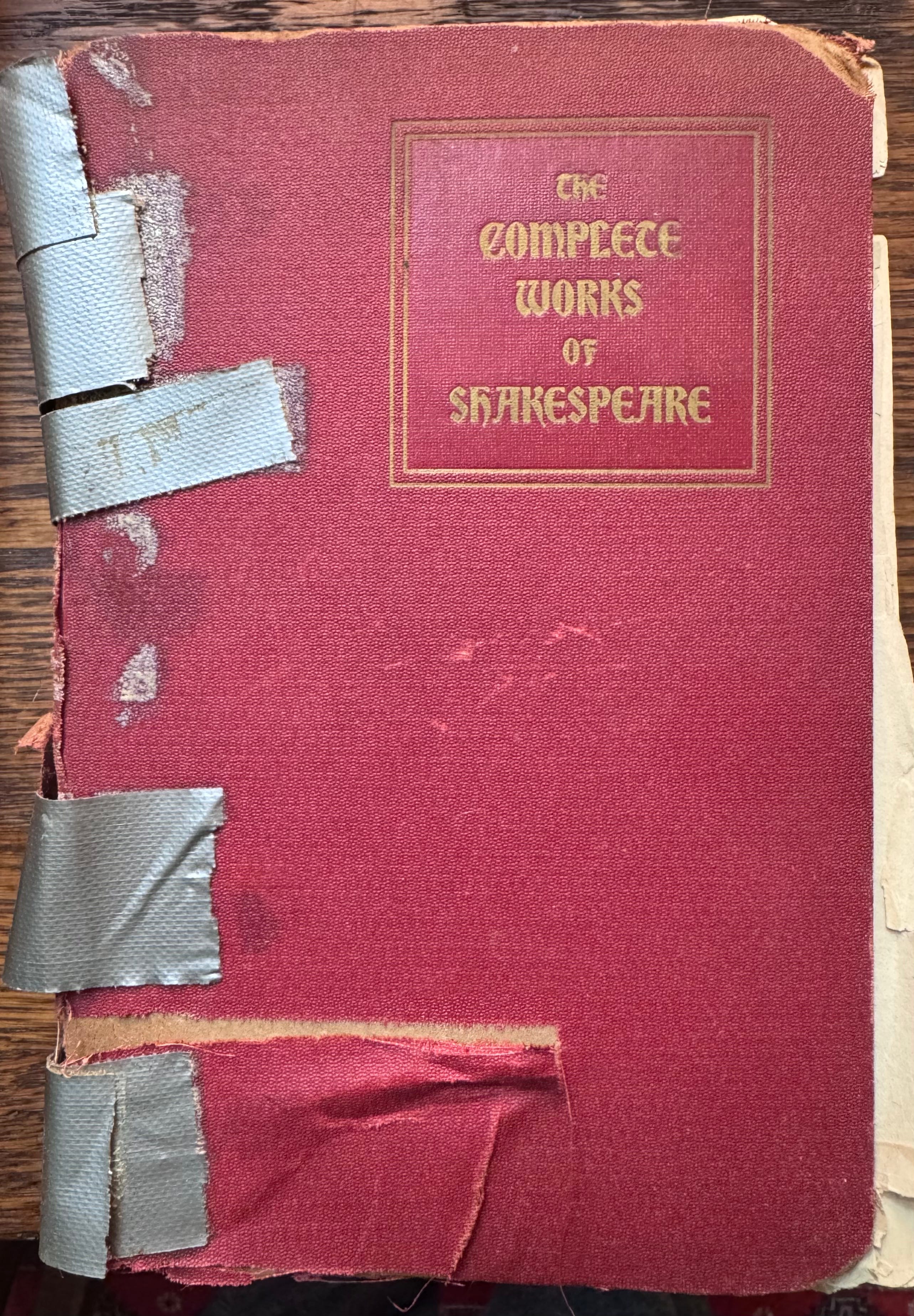
My grandmother, Clara, was born in Brooklyn in 1901 and in her teens actually knew some (by then) very old people who had fought in the Civil War. After living through two World Wars and growing up with people who died in both, she observed it with quiet prayer and a midnight re-read of Troilus and Cressida and Julius Caesar, because that is the way my grandmother was (and in the cleaning out of my mother’s apartment, I’ve taken possession of my grandmother’s Collected Works of Shakespeare, which was so well-used and loved by her that it literally fell apart, so she bound it together with electrical tape. I’m planning on bringing it to a bindery near where I live, as a birthday present to myself next month).
My mother, on the other hand, observed Memorial Day at many a country club golf outing and backyard party, and was frequently invited to the ones thrown by my neighbors, who had great patience with her. (Fond memory: our neighbor Sherry taking my Armani-clad mother by the hand into her large and active chicken coop to collect eggs. Just blow the feathers off them, Rita, she said. I’ll give you a rag to wipe off the shit.) She ate everything: hamburgers and ribs and hot dogs and potato salad, pie and ice cream, and chips and dip. But she drew the line at beer because it bloated her.
This is a strange year, and I feel like Memorial Day means more than firing up the Weber and trying not to immolate the cheeseburgers. We have a lot to remember: those who we lost to old age and illness, those who have died in detention, those who have died protesting detention, those who have died fighting in Iran for reasons that are still not evident (beyond oil and sea-side real estate), those who have been lost to the gun violence that continues to ravage my country like the bubonic plague. I have experienced my own profound loss with the death of my mother last October after years of acrimony, trying to keep her healthy, wanting to make her happy, and mostly failing. So my midweek list is focused on the things I’ve found and done that have grounded and given me some peace, and I hope you find they do the same for you.
In My Vases


My grandmother, mother, and great-grandmother were all fanatical about lilacs, and five or so years ago, Susan and I planted a very young Miss Kim lilac in our backyard next to a gigantic and ancient lilac tree that was failing (but we didn’t have the heart to take it down; also, we called it The Phil Spector Bush because it was exactly the shape of his hair.) Every year towards the end of May, I go around the house and open the windows to the backyard, and great gusts of lilac sweetness waft through our rooms. This morning, while my friends in the UK are enjoying The Chelsea Flower Show, I stepped outside with a tiny pair of secateurs, clipped a basketful of lilac stems, and spent about forty-five minutes arranging them. Just as good as a yoga class or twenty minutes of meditation for calming my nerves. (And the house smells lovely.) Some suggestions about flowers perfect for cutting right now (I live in New England, which is supposed to be cool but hit 92 degrees yesterday): Peonies, Late Tulips. Columbine, Zinnia, Viburnum, Ranunculus. For more on bringing in cut flowers, visit my friend Susie Middleton at SixBurnerSue, Kelli Pease’s The Flower Remedy, and Pollyanna Wilkinson’s The Well-Dressed Garden.
I do not know when this started, but I’m suddenly wanting to rescue cut flowers that are starting to look a little wan, bring them home, cut them, and put them in a vase. Not that I want my living room to look like the receiving area at a funeral parlor, but life being what it is right now, cut flowers are very nice to have around. Most of us have been there: we walk into a local grocery store or farmer’s market and march right past the cut flowers because we don’t need cut flowers — we need eggs and milk. Next time you’re at Trader Joe’s or your local market, it’s worth it to have a look around. Ditto your local nursery.
This should really be in my TBR section, but I’m putting it here: Frances Palmer’s Life with Flowers is an absolute inspiration, as is this long-ago published out-of-print classic, Forcing, Etc., by my dear friend and former Clarkson Potter author, Katherine Whiteside. (Katherine’s book is worth the search.)
In My Headphones and On My (Small) Screens
I loved this wonderful conversation between Homing’s Matt Gibberd and Sue Stuart-Smith, author of The Well-Gardened Mind, psychiatrist, psychotherapist, gardener, and wife of garden designer Tom Stuart-Smith. Stuart-Smith talks here about gardening-as-medicine, and the link between general well-being, mental health, and the act of gardening and being in nature. She speaks in this conversation about her maternal grandfather, who began gardening as a form of rehabilitation after having been a prisoner-of-war in Turkey during the First World War, and it brought me back to Melissa Harrison’s podcast, The Stubborn Light of Things (below) in which she talks about young men during the First World War taking copies of Gilbert White’s The Natural History of Selborne into the trenches to remind them of home. Gardening and nature are healers, and (I am guessing) the wilder, the better. As I write this, I think of my late mother-in-law, Helen Turner, who was the sort of person who could throw a handful of seeds at any type of ground and have them germinate and thrive; she lived much of her life with profound anxiety and PTSD stemming from a tunnel accident — she was in the Holland Tunnel Fire of 1949 — and one of the ways she dealt with it was by gardening. A few weeks before her death at ninety-four from congestive heart failure, she pointed to her eight foot shrubs and asked Do you think I’ll be able to trim my hemlocks this year? She did it annually until she was ninety-three, while standing on a step stool.
Thanks (again) to India Knight, I found my way to Melissa Harrison’s gorgeous podcast, The Stubborn Light of Things, which takes its name from a line in poet Alison Brackenbury’s Brockhampton:
The land was too wet for ploughing; yet it is done.
Even the stones of the ridges lie sulky and brown.
The roads are a slide of mud. The wet sky
Is blank as the chink of the hawk’s perfect eye.
A blink before the dark comes down
Drops the peregrine sun.
The land glows like an awkward face.
Broken posts, by which sheep graze
Shine pale as growing wood.
Above, the last crow’s wings
Cannot frighten from my blood
The stubborn light of things.
My friend, Oldster Magazine founder Sari Botton had a wonderful conversation about The Persistence of Time, with A.J. Daulerio on The Small Bow. A must-listen.
One of my favorite chats: Maira Kalman talking to Andrew Zuckerman on Time Sensitive about everything from walking to and art-making to doing jumping jacks in front of a Sargent painting at the Met, in an engrossing Covid-era conversation.
I come from a family of epic — TRULY epic — secret-keepers: Everything from my aunt’s decision to not tell me about my beloved father’s impending quadruple by-pass when I was a freshman in college (until her younger daughter kinda-sorta-not-so-much-accidentally spilled the beans the night before the surgery and I jumped on a flight home from Boston) to my grandmother walking out on her husband and children in 1926 and her daughter not telling her family for over seventy years until I included it in a book (my father talked about it at my childhood dinner table, so I never knew it was a secret because it wasn’t one in my house) and was promptly tossed out of the family after a lifetime of happy Thanksgivings and weddings. Dani Shapiro’s Family Secrets award-winning podcast is extraordinary (I’ve been a guest on it), and now, Holly Brown’s Everybody Knows But Me joins the podcast universe with a show about what happens when a massive family secret looms so large that it turns lives upside down. Brown, daughter of Hollywood executive Mark Brown, is basically the last one to find out that she has not one but two half-siblings — twins — who her father managed to keep secret until his dying breath. I get why Brown was so enamored of the perfect-family sitcoms her father worked on as I was The Brady Bunch: the hope of normalcy was dangling right in front of us, like Tantalus’s grapes. Have a listen.
In My Kitchen